Evaluating the Versatility and Application of Autumn Patterns with Geometric Style in Creative Design
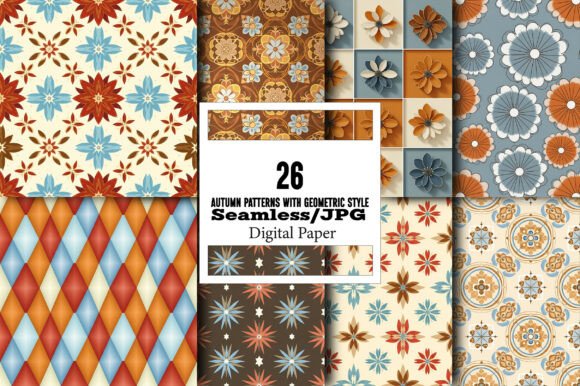
In the realm of digital asset creation and physical product customization, finding a design aesthetic that balances seasonal warmth with structural precision is often a challenge. Autumn Patterns with Geometric Style has emerged as a sophisticated solution for designers, crafters, and small business owners who require visuals that are both inviting and modern. This specific style merges the organic, earthy tones traditionally associated with fall—such as burnt orange, deep red, mustard yellow, and forest green—with the clean lines, symmetry, and repetitive structures characteristic of geometric abstraction.
Understanding the nuances of this style is crucial for anyone looking to produce high-quality prints, digital backgrounds, or sublimation graphics. Unlike traditional autumn motifs that rely heavily on realistic depictions of leaves, pumpkins, or harvest scenes, geometric interpretations offer a contemporary edge. This article explores the distinct characteristics of these patterns, compares them to alternative styles, and evaluates their suitability across various applications, from scrapbooking to large-format wall art.
Defining the Aesthetic: Where Nature Meets Mathematics
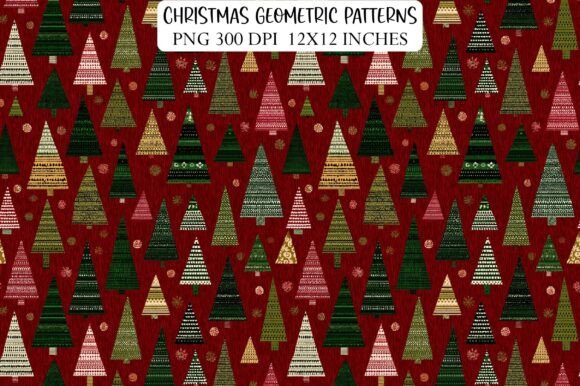
The core appeal of Autumn Patterns with Geometric Style lies in its ability to evoke the feeling of the season without being literal. While a watercolor leaf pattern might feel soft and romantic, a geometric version uses tessellations, hexagons, triangles, or abstracted leaf shapes arranged in precise grids or seamless repeats. This approach results in a visual texture that feels organized and intentional, making it particularly effective for brands seeking a modern, minimalist, or Scandinavian-inspired look.
When evaluating this style, one must consider the color palette. The success of these designs depends heavily on the contrast between warm autumnal hues and neutral backdrops like cream, beige, or charcoal. High-resolution files, typically provided in JPG format at 300 DPI, ensure that these subtle color gradients and sharp edges remain crisp when scaled. This technical quality is non-negotiable for professional outputs, ensuring that the transition from digital screen to physical print is seamless.
Comparative Analysis: Geometric vs. Traditional Autumn Motifs
To determine if Autumn Patterns with Geometric Style is the right choice for your project, it is helpful to compare it against other common seasonal design categories. The decision often hinges on the target audience and the intended medium.
- Traditional Realistic Styles: Designs featuring hand-painted leaves, acorns, and rustic textures are timeless but can sometimes appear dated or overly busy. They work best for cottage-core aesthetics or traditional holiday branding. In contrast, geometric patterns offer a cleaner canvas that allows text and logos to stand out more clearly.
- Vintage Floral Patterns: While floral autumn designs bring elegance, they often lack the structural rigidity needed for certain packaging types or tech accessories. Geometric styles provide a uniform repeat that is easier to align on cylindrical objects like tumblers or complex surfaces like wind spinners.
- Minimalist Line Art: Simple line drawings are popular for their simplicity but may lack the visual weight required for background elements in social media graphics or large posters. Geometric patterns fill space effectively without overwhelming the viewer, offering a middle ground between empty minimalism and cluttered complexity.
The tradeoff here is clarity versus emotion. Traditional styles often communicate "coziness" immediately through recognizable symbols. Geometric styles communicate "style" and "modernity," requiring the viewer to interpret the warmth through color rather than iconography. For audiences aged 20–50 who appreciate contemporary design trends, the geometric approach is often more resonant.
Application Scenarios and Best-Fit Use Cases
The versatility of Autumn Patterns with Geometric Style makes it applicable across a wide spectrum of creative endeavors. Because these patterns are designed as seamless repeats, they are exceptionally well-suited for continuous printing processes and digital wrapping techniques.
Physical Product Customization
For makers utilizing sublimation technology, such as those creating custom tumblers, mugs, and t-shirts, geometric patterns are ideal. The mathematical nature of the design ensures that there are no awkward breaks or misalignments when the image wraps around the curve of a mug or the body of a travel bottle. Similarly, for fabric printing, whether for personalized pillows or party napkins, the geometric structure provides a consistent rhythm that looks professional even on larger scales.
Packaging is another area where this style shines. Small businesses selling handmade goods, such as candles or soaps, benefit from the premium look of geometric labels. The sharp lines convey quality and attention to detail, elevating the perceived value of the product inside. This extends to KDP (Kindle Direct Publishing) book covers, where a geometric autumn design can signal a modern novel or a stylish journal to potential readers.
Digital and Social Media Graphics
In the digital space, Autumn Patterns with Geometric Style serves as an excellent foundation for website backgrounds, email headers, and social media posts. The repetitive nature of the pattern allows for easy scaling and cropping, which is vital for maintaining visual consistency across different platform aspect ratios. Furthermore, because these designs are often available as printable digital papers, content creators can use them in Canva or Photoshop to create layered compositions for blog graphics or Pinterest pins.
Crafts and Stationery
For hobbyists engaged in junk journals, scrapbooking, or card making, these patterns offer endless possibilities. The geometric style works well for decoupage projects, where layers of paper create depth. It also complements planner inserts and wedding invitations, providing a structured yet festive backdrop for typography. When used in mini junk journals or bookmarks, the compact size of the geometric motifs allows for intricate detailing that rewards close inspection.
Evaluating Technical Specifications and File Quality
When sourcing assets for Autumn Patterns with Geometric Style, technical specifications play a critical role in the final output. The standard requirement for professional-grade materials is a resolution of 300 DPI (dots per inch). This density ensures that when the file is printed, the pixels are too small for the human eye to distinguish, resulting in smooth curves and sharp intersections.
Additionally, the format of the file matters. JPG is a widely compatible format that supports high-quality compression, making it suitable for most printing and digital use cases. However, users should always verify that the original files come without watermarks, especially when purchasing commercial licenses. Instant digital downloads provide immediate access, allowing creators to iterate quickly without waiting for physical shipping. This immediacy is particularly valuable for last-minute party decorations or urgent client requests.
Another important consideration is scalability. Since these patterns are vector-like in their repetition, they can be resized to suit specific needs without losing integrity. Whether you need a tiny sticker for a laptop or a large wallpaper for a phone case, the geometric structure remains intact. This flexibility reduces the need to purchase multiple variations of the same design, offering better value for money.
Decision Factors: When to Choose Geometric Autumn Patterns
Selecting the right design style ultimately depends on the goals of your project. You should consider choosing Autumn Patterns with Geometric Style if:
- You prioritize modern aesthetics: Your brand or personal style leans towards contemporary, minimalist, or Scandinavian design principles.
- You need versatile repeats: Your project involves wrapping curved surfaces or creating continuous backgrounds where alignment is key.
- You want broad appeal: Geometric designs tend to have a wider demographic appeal than highly specific thematic illustrations, making them safer choices for general merchandise.
- You value efficiency: Seamless patterns reduce the time spent editing and aligning images in design software.
Conversely, you might opt for a different style if:
- You are targeting a niche traditional market: Older demographics or specific cultural groups may prefer realistic, nostalgic imagery over abstract geometry.
- You need strong narrative elements: If the story of the design is as important as the visual, a detailed illustration with characters or specific objects might tell the story better than an abstract pattern.
Conclusion
Autumn Patterns with Geometric Style represents a powerful intersection of seasonal warmth and modern design discipline. By moving away from literal representations of fall, this style offers a fresh, adaptable toolkit for creators across various mediums. Its strengths lie in its versatility, technical precision, and broad aesthetic appeal. Whether used for sublimation graphics, digital presentations, or handmade stationery, these patterns provide a reliable foundation for high-quality creative projects. As with any design choice, the key is to align the style with your audience’s expectations and the functional requirements of your chosen medium. By understanding the tradeoffs between geometric abstraction and traditional realism, you can make informed decisions that enhance the impact and professionalism of your work.