Hand Painted Digital Patterns: A Practical Resource for Creative Professionals
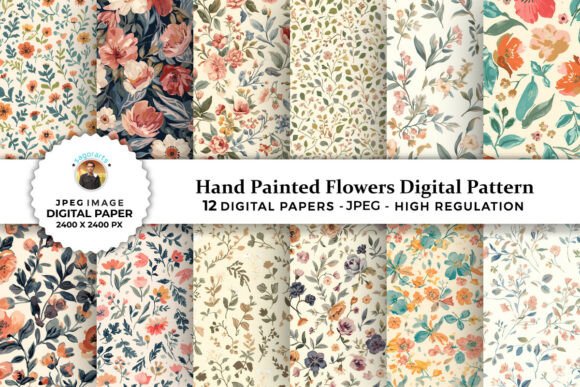
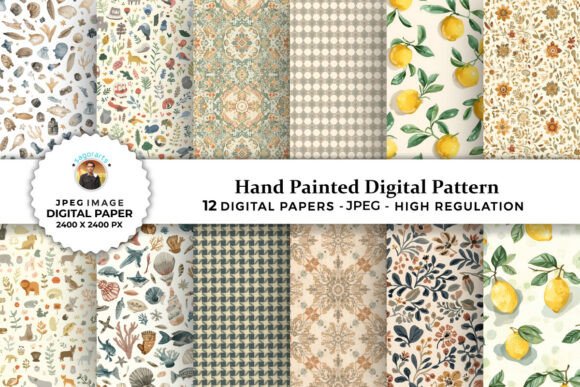
In the evolving landscape of digital design and print-on-demand services, the demand for assets that bridge the gap between organic artistry and technical precision has never been higher. Hand Painted Digital Patterns represents a specific category of digital assets designed to offer the warmth and uniqueness of traditional media while maintaining the utility required for modern workflows. This collection, comprising twelve distinct high-resolution designs, targets creators who require versatility without compromising on aesthetic quality.
For professionals ranging from small business owners in the stationery industry to freelance graphic designers managing tight deadlines, the distinction between a generic stock image and a curated digital pattern set is significant. The latter offers consistency, scalability, and a cohesive visual language that can elevate a brand identity or a personal project. This analysis examines the practical applications, technical specifications, and potential limitations of this particular asset pack, providing an objective overview for those considering integrating these files into their creative processes.
The Intersection of Artistic Texture and Digital Utility
The core value proposition of Hand Painted Digital Patterns lies in its ability to replicate the subtle imperfections and rich textures of physical painting within a digital environment. Unlike vector-based geometric patterns or AI-generated textures that can sometimes appear repetitive or sterile, hand-painted designs retain a human touch. This characteristic is particularly valuable in industries such as wedding planning, boutique retail, and educational publishing, where emotional resonance and perceived authenticity are key selling points.
When evaluating digital assets, it is crucial to understand how "hand-painted" translates to digital output. In this context, it typically refers to raster images created using digital brushes that mimic watercolor, acrylic, or ink washes. These patterns provide depth and variation that flat colors cannot achieve. For a greeting card designer, this means the background adds character without overwhelming the typography. For a tumbler wrap manufacturer, it ensures that the product feels premium and artisanal rather than mass-produced.
Technical Specifications and Workflow Integration
Usability is often the deciding factor in whether a digital asset remains in a creator’s library or gets discarded after a single use. The provided package includes 12 digital papers contained within a single zip file, a structure that prioritizes ease of access and organization. Each file is delivered in JPEG format with dimensions of 2400 x 2400 pixels. While this resolution may seem modest compared to ultra-high-definition standards used in large-format printing, it is highly sufficient for most common craft and commercial applications.
- Resolution Analysis: At 2400 x 2400 pixels, these files support high-quality printing at standard sizes (such as 8x8 inches or 10x10 inches) at 300 DPI, which is the industry standard for sharp, clear prints. They are also perfectly adequate for web use, social media graphics, and digital invitations.
- File Format: The choice of JPEG over PNG or TIFF is notable. JPEGs are universally compatible with almost all design software, from Adobe Photoshop and Illustrator to Canva and Microsoft PowerPoint. However, users should be aware that JPEG is a lossy compression format. For projects requiring transparent backgrounds or non-destructive editing, these files would need to be converted or traced, adding a step to the workflow.
- Organization: Bundling the files in a zip archive simplifies the download process and reduces the risk of missing individual assets. This is a practical consideration for educators teaching digital crafting courses or freelancers who need to quickly deploy multiple assets for different client requests.
Practical Applications Across Industries
The versatility of Hand Painted Digital Patterns allows them to serve multiple niches effectively. Below are specific scenarios where these assets demonstrate high utility.
Stationery and Paper Goods
This is perhaps the most natural fit for the product. Small businesses producing wedding invitations, baby shower cards, and thank-you notes can use these patterns as backgrounds. The hand-painted texture adds a layer of sophistication that plain solid colors lack. Because the patterns are seamless (assuming standard pattern tile behavior, though verification depends on the specific source), they can be tiled to fill any page size without visible seams, making them efficient for bulk printing.
Product Wrapping and Merchandise
The rise of personalized merchandise has created a surge in demand for custom wrapping solutions. Tumbler wraps, laptop skins, and phone cases often benefit from textured backgrounds that hide minor printing imperfections and add visual interest. The 2400-pixel square format allows for easy cropping and scaling to fit various aspect ratios. For entrepreneurs selling on platforms like Etsy, using unique digital patterns helps differentiate products from competitors relying on generic clipart.
Digital Scrapbooking and Blogging
Content creators and bloggers frequently struggle with finding consistent visual themes for their posts. These digital papers can serve as headers, sidebars, or decorative elements in blog layouts. Similarly, digital scrapbookers—those who create layouts electronically rather than physically—value assets that look authentic. The hand-painted style fits seamlessly into themes centered around nature, nostalgia, or artistic expression.
Educational Materials
Educators and homeschooling parents often seek resources that are both engaging and professional. Worksheets, classroom decorations, and presentation slides can be enhanced with these patterns. The organic feel of the designs can make learning materials appear less rigid and more inviting, potentially improving student engagement.
Evaluating Strengths and Potential Limitations
No resource is without trade-offs. Understanding the strengths and limitations of Hand Painted Digital Patterns helps users manage expectations and plan their workflows accordingly.
Strengths:
- Aesthetic Quality: The primary strength is the visual appeal. The textures convey effort and care, which translates well to consumer-facing products.
- Variety: Twelve distinct patterns provide enough variety to cover different seasons, themes, and color palettes without overwhelming the user. This balance prevents decision paralysis while offering sufficient choice.
- Accessibility: The straightforward file structure and common format lower the barrier to entry for beginners who may not be proficient in complex file management systems.
Potential Limitations:
- Resolution Constraints: As noted, 2400 pixels is not suitable for very large format prints, such as billboards or wide banners. Users attempting to scale these up significantly may encounter pixelation or blurriness. It is essential to verify print requirements before purchasing or downloading.
- Color Management: Since the files are JPEGs, they do not include CMYK color profiles by default. For professional offset printing, users must convert the RGB files to CMYK, which can sometimes result in slight color shifts. Designers working in print-heavy industries should test a sample print to ensure color accuracy.
- Lack of Editable Layers: As raster images, the brush strokes are flattened. Users cannot easily change the color of a specific element or remove a detail without advanced photo editing skills. This limits flexibility compared to vector EPS or AI files.
Who Should Consider This Resource?
The suitability of Hand Painted Digital Patterns depends largely on the user’s end goal. It is an excellent fit for:
- Small Business Owners: Those creating low-to-medium volume print runs for items like cards, tags, and wrappers.
- Hobbyists and Crafters: Individuals using home printers or cutting machines like Cricut and Silhouette for personal projects.
- Web Designers: Professionals needing quick, attractive backgrounds for websites and email newsletters.
Conversely, it may not be ideal for:
- Large-Scale Printers: Operations requiring massive, high-DPI files for billboard or mural printing.
- Vector-Only Workflows: Designers who exclusively work with scalable vector graphics and refuse to use raster assets.
Final Observations on Value and Long-Term Use
From a practical standpoint, the value of Hand Painted Digital Patterns is derived from its time-saving capabilities and aesthetic contribution. In an era where content volume is high, having a reliable library of pre-made, high-quality textures allows creators to focus on layout and messaging rather than generating every background from scratch. The hand-painted style adds a level of polish that is difficult to achieve quickly with basic tools.
While the resolution limits its use in certain large-format applications, its performance in standard craft, web, and small-batch print contexts is robust. The inclusion of twelve diverse options ensures that the asset pack remains relevant across multiple projects and seasons, reducing the need for frequent new purchases. For creators who prioritize organic aesthetics and operational efficiency, this collection offers a balanced combination of artistic quality and technical convenience. It serves as a functional tool that enhances the final output without introducing unnecessary complexity into the design process.
Ultimately, the decision to utilize these patterns should be guided by the specific needs of the project. If the goal is to produce tangible, visually appealing goods or digital content that feels crafted and personal, these files provide a solid foundation. By understanding their technical boundaries and leveraging their artistic strengths, users can integrate Hand Painted Digital Patterns effectively into their creative portfolios, ensuring consistent quality and professional presentation across all deliverables.